A high-pressure hydraulic hose – the unsung hero of the mobile and industrial world – is a highly specialised, reinforced flexible conduit designed to safely carry pressurised hydraulic fluids in systems where reliability is paramount. These hoses handle some of the toughest working pressures out there – as much as 200 bar up to 700 bar and beyond – and the super-high pressure types can even go up to a whopping 3,000 bar for those niche applications where you need that extra oomph. It takes real engineering know-how to build one of these bad boys, incorporating multiple layers of steel wire reinforcement to stop them from bursting, collapsing or kinking under extreme pressure.
High-pressure hydraulic hoses play a critical safety and efficiency role in the operation of hydraulic cylinders, motors and tools across the board – from construction and agriculture to manufacturing and plant maintenance. Without the right hose assembly, even the most cutting-edge hydraulic gear is a waste of money as it won’t be able to deliver that all-important controlled force and motion.
From excavators on building sites to presses in the factory environment, these hoses are the essential flexible link in every hydraulic circuit. That’s why getting the right hose is so vital – undersized or badly fitted hoses can fail catastrophically – putting operators at serious risk and bringing production to a grinding halt. So it’s no surprise that professional guidance and quality components are vital.
How A High-Pressure Hydraulic Hose Works
A typical hydraulic circuit usually consists of a pump which generates flow, valves to control direction and pressure and actuators (cylinders or motors) that do the actual work. The hose is that flexible bit of kit that carries oil under pressure between these components, allowing for movement and routing around obstacles that rigid pipes just can’t handle.
High-pressure hydraulic hoses are built with a layered construction to keep the pressurised fluid safe while still being flexible enough for installation and operation. The inner tube is made from synthetic rubber (which comes in all sorts of flavours – nitrile and NBR to name a couple), which is designed to be compatible with mineral oils and other hydraulic fluids. Then we have one or more reinforcement layers of high-strength steel wire – either braided or spiral-wound – which resist the pressure pushing outwards from the inside. And finally, we have the outer cover, which is usually a fancy rubber or polyurethane that protects the inner workings from damage, UV light and contaminants.
The relationship between working pressure and burst pressure is all down to a standard safety factor. Most high-pressure hydraulic hoses have a 4-to-1 ratio, so if a hose is rated at 700 bar working pressure, that means it should be able to withstand a burst pressure of around 2,800 bar. That’s the safety margin to take into account for those pesky pressure spikes and impulse cycles.
Engineers have to strike a balance between how flexible the hose needs to be and how much pressure it needs to handle. Adding more steel wire layers increases pressure capacity but also stiffens the hose, so they have to make a call on how much pressure is needed versus how much flexibility is required. If you need a hose that can handle tight routing for low pressures, then a more flexible hose with fewer reinforcement layers is the way to go – whereas for those really high pressures, you need something a bit more robust – like a spiral-wire hose.
Key construction elements are:
- Inner tube: designed to be compatible with hydraulic fluids – usually synthetic rubber or thermoplastic
- Reinforcement: braided or spiral-wound steel wire to stop it from bursting
- Outer cover: rubber or polyurethane to protect from damage
- End fittings: crimped or swaged connectors to match system ports
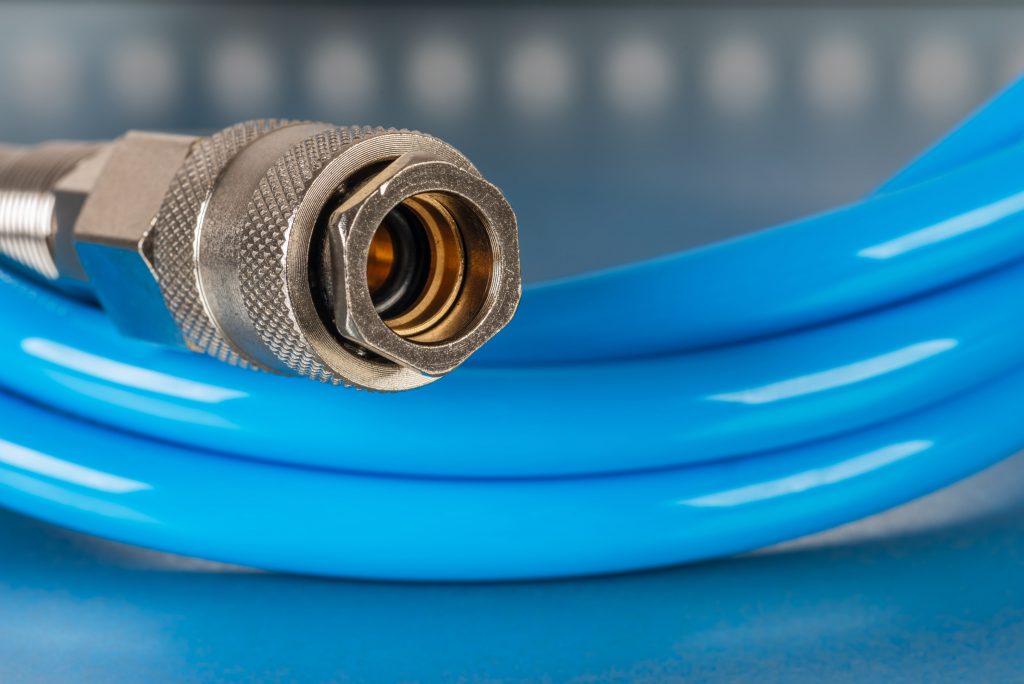
Common Pressure Ratings, Sizes and Types
High-pressure hydraulic hoses come in all sorts of shapes and sizes. Matching the right hose to the hydraulic system requirements is key to reliability and safety.
Standard working pressures for industrial and mobile hydraulics are 210 bar, 350 bar, 420 bar and 700 bar – and then you have the specialist hoses that can go way beyond that – like the ones for hydraulic jacking and bolt torquing. When you see a pressure rating on a hose, that’s the maximum continuous working pressure – and if you go beyond that, you’re shortening the service life and taking a risk.
Typical internal diameters used in mobile and industrial hydraulic applications range from 1/4” (6mm) to 1 1/4” (32mm) – and it’s the bore size that directly affects flow capacity and pressure drop. If the diameter is too small, you’ll get flow restriction – and if it’s too large, it’s just unnecessary weight and bulk. Getting the size right is what keeps fluid velocity in check at around 10 to 30 feet per second in pressure lines.
The three main construction types suit different operating conditions:
Wire-braided hose (e.g. 2-wire designs such as SAE 100R2AT or EN 853 2SN) can handle working pressures up to around 400 bar – depending on size. These hoses are great for moderate pressures and tight routing in construction, agriculture and general industrial – where you don’t need to go for the high-pressure extremes. Spiral-Wire Hoses – When Every Bar Counts
4-spiral or 6-spiral designs like SAE 100R13, R15, or EN 856 4SP/4SH – these are the go-to for very high pressure and high-impact jobs. With working pressures that can hit 420 bar and go up to 700 bar or more, they’re perfect for things like excavators, injection moulding machines and heavy-duty presses. Yes, they come with a trade-off – a bigger minimum bend radius and a more rigid construction.
Thermoplastic hoses, on the other hand, use a polymer tube with textile or steel reinforcement and are a lightweight, compact choice for ultra-high-pressure hand tools (up to 3,000 bar) where fast system response is a must. You’ll find them in rescue gear, hydraulic jacks, and torque wrenches.
Some relevant international standards to keep in mind are SAE 100R1, R2, R13, R15, EN 853, and EN 856. These define how the hose is built, what kind of pressure it can handle, and the testing it needs to go through.
Typical Applications for High-Pressure Hydraulics
High-pressure hydraulic hoses are all over the place – you’ll find them in every industry where controlled force and motion are required. The conditions vary widely, but the goal’s always the same: safely get that pressurised oil where it needs to go.
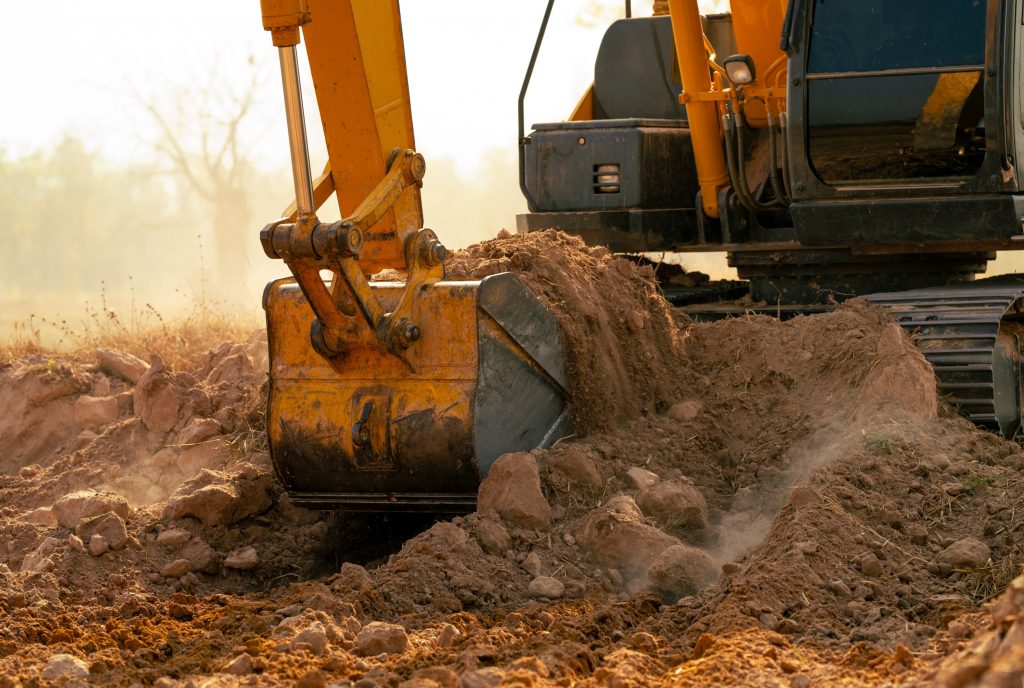
Mobile plant – boom cylinders, steering, and attachments – relies on high-pressure hoses to do its thing. And that includes excavators, telehandlers, access platforms, and agricultural tractors, all of which need flexible hose assemblies to get the job done. On construction sites and farms, hoses face constant movement, vibration, abrasion and lots of exposure to water and the elements.
Industrial machinery operates under different conditions, but the pressure cycles are just as demanding. So we’re talking high-cycle fatigue, high temperatures, and precise pressure control for hydraulic presses, injection moulding machines, CNC clamping systems, and test rigs.
For maintenance tools like 700 bar hydraulic jacks, torque wrenches, pullers and lifting systems, you need ultra-high-pressure hoses with low volumetric expansion to get the job done accurately. You’ll find them in workshops, on breakdowns, and in heavy industry for component assembly and disassembly.
Specialist sectors – like oil and gas, mining, and marine and dockside plant in the UK – present unique challenges. You’ve got to deal with things like salt air, aggressive chemicals, and extreme temperatures. And when you’re working in these environments, downtime is a luxury you can’t afford.
We work with a lot of UK customers in all these sectors to assemble and replace high-pressure hose sets. Whether it’s matching an existing spec or recommending an upgrade, we aim to keep your downtime to a minimum and get you up and running again fast.
Choosing the Right High-Pressure Hydraulic Hose
Get it wrong, and you’ll end up with premature failure, safety risks and costly downtime. So a structured approach is key to making sure you’ve got the right hose for the job.
The STAMPED method is a good place to start:
- Size: Get the internal diameter right to match your flow rate and system velocity limits
- Temperature: Make sure the hose can handle the ambient and fluid temperatures (typically -40°C to +100°C for standard rubber hoses)
- Application: Consider how dynamic movement, routing and abrasion exposure will affect your hose
- Media: Check the inner tube is compatible with your hydraulic fluid (mineral oil, water-glycol, bio-oils, or synthetics)
- Pressure: Select a hose with a working pressure rating that exceeds the maximum system pressure, including spikes
- Ends: Get the fitting types right (BSP, JIC, ORFS, DIN metric, flanges) to match system ports
- Delivery: Check the length and lead time, and make sure you’ve got the right certification
When specifying a replacement or new hose, always verify the maximum working pressure with a safety factor of 4:1, which is standard. And don’t forget to check tube material compatibility with the hydraulic fluid you’re using – some synthetic fluids or bio-oils require specific compounds.
Routing constraints matter too. Every high-pressure hose has a minimum bend radius – typically 6-12 times the outer diameter – and installing a hose below that limit will cause internal damage and early failure. And don’t forget about abrasion, UV exposure and chemical contact in the environment – select an outer cover material that can handle all that.
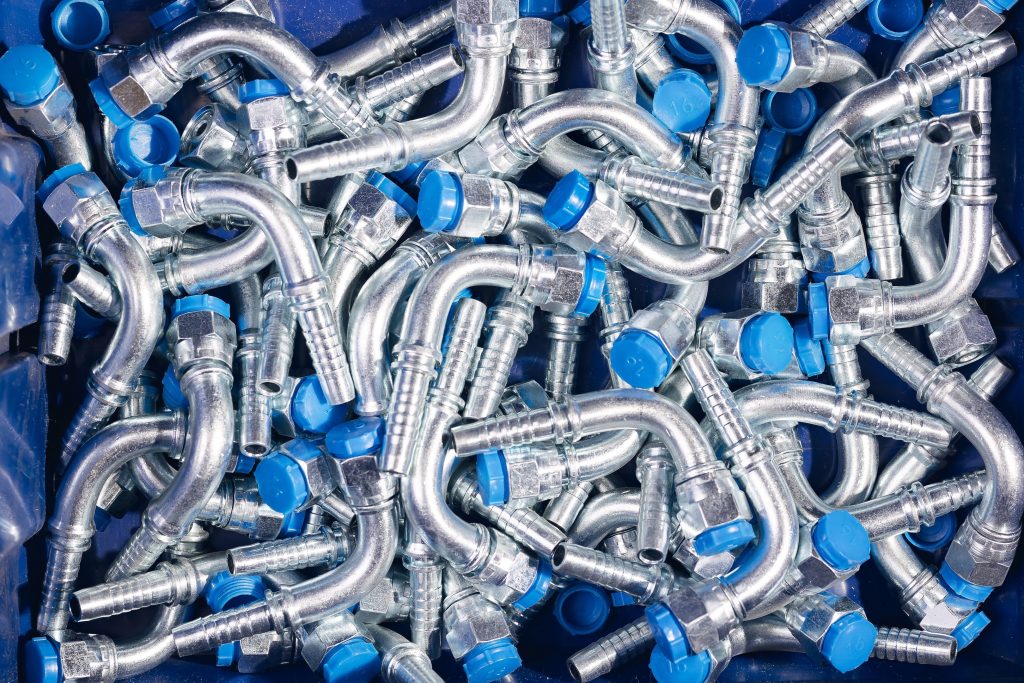
End fittings must match system ports exactly. No mixing and matching – that just causes leaks or blow-offs. Fittings should be correctly crimped by trained technicians using calibrated equipment, not slapped together with generic clamps.
Our team can help specify replacements or upgrades and assemble hoses for you while you wait. But for complex requirements, we recommend a site visit or detailed discussion to make sure the product is right for the application. You can find more details on our hose and fittings service.
Safety, Standards and Maintenance
Oh and just one last thing – keeping an eye on your hoses and fittings is very important. High-pressure hydraulic hoses working under 200 bar pressure and up are critical components that require extra care. Failure can not only cause costly damage to equipment but also serious injuries and environmental contamination. Small pinhole leaks in hydraulic lines can pass liquid right through a person’s skin, creating life-threatening hydraulic injection injuries that demand immediate medical attention.
Compliance with international standards like ISO, EN and SAE, along with following best practices, is crucial. These best practices include correctly assembling hoses with calibrated crimping tools, performing pressure tests where required and keeping a full record of hose assemblies. Reputable suppliers provide all the necessary documentation and test certificates for critical applications.
Common failure modes include:
- Wear and tear: the outer cover becomes worn out, and the inner reinforcement is exposed to corrosion
- Degradation: inner tube degrades due to incompatibility with fluids or excessive heat
- Blown-off fittings: incorrect crimping or a damaged ferrule causes a blown-off under pressure
- Kinking: installing below the minimum bend radius leads to internal wire fatigue
- Pinhole leaks: small openings develop due to corrosion or impulse fatigue
Regular inspection and timely replacement can prevent most failures. A simple visual inspection routine should check the outer cover for damage, kinking, rubbing points, fluid leaks at fittings, corrosion, bulging or deformation. Any hose showing these signs should be swapped out right away.
Instead of replacing hoses on a fixed timetable, you can use condition-based hydraulic maintenance, which is a much better strategy. This means you can schedule replacements based on data such as running hours, pressure cycles, and sensor readings. This method reduces unnecessary replacements while catching hoses approaching the end of their service life before they fail.
Modern hydraulic systems increasingly make use of hydraulic monitoring sensors and IoT hydraulics to track pressure spikes, temperature and flow in real-time. This data feeds back to maintenance teams, helping them to make better decisions and reduce unplanned downtime.
Integrating High-Pressure Hoses In Smarter Hydraulic Systems
High-pressure hoses are now an integral part of smarter connected hydraulic systems, no longer just passive components. The integration of sensors and data analytics has transformed how operators keep track of and maintain hose assemblies.
IoT hydraulics involves linked pressure, temperature sensors, flow meters and hose condition sensors that track how hoses are being used in real time. This data is sent to central systems where trends can be investigated, anomalies can be flagged and maintenance scheduled proactively. For fleet operators or companies with multiple sites, this gives visibility of all hydraulic equipment from a single dashboard.
You can install hydraulic monitoring sensors close to or within hose assemblies to detect abnormal pressure spikes, micro-leaks or excessive temperature. Early detection of these conditions helps prevent catastrophic failure and lets you plan for repairs during scheduled downtime rather than emergency call-outs.
This helps support condition-based maintenance, where sensor data determines when a hose is getting close to the end of its safe service life. Rather than relying on fixed replacement intervals, maintenance teams can prioritize hoses showing signs of stress while leaving healthy ones in service. This reduces both component costs and the risk of unexpected failure.
In applications like quarry plants, commercial vehicle fleets and manufacturing lines in the UK, unplanned downtime can be a huge expense. With remote monitoring, maintenance teams can respond before a small issue becomes a major breakdown. As these technologies become more accessible, specifying high-pressure hoses that work well with modern monitoring systems can offer long-term gains in reliability, safety and cost control.
Our team is here to advise on hose selection within sensor-led systems and help customers get ready for the next generation of hydraulic maintenance.
Our High-Pressure Hydraulic Hose Services
We help customers across the UK with high-pressure hose requirements, from single replacement hoses to complete system upgrades.
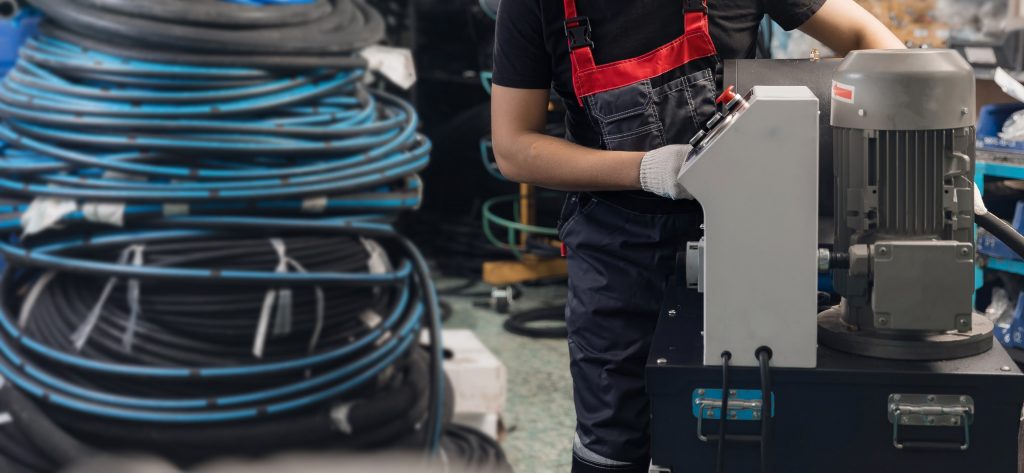
Our services include assembling custom hoses while-you-wait at our workshop or from mobile vans, identifying and swapping out old or unmarked hoses, pressure testing and certifying assemblies where needed, and upgrading or converting existing systems, such as changing fitting types or improving routing. We stock a wide range of high-pressure hose types, end fittings and accessories to keep downtime to a minimum.
Whether you need a standard length off the shelf or a bespoke assembly to your exact requirements, our trained technicians ensure every hose is assembled correctly and tested before dispatch. For more information, check out our hose and fittings service.
If you are seeing repeated hose failures, unexplained leaks, or need to upgrade an ageing hydraulic system, get in touch with our team with your hose specs, site details and any issues you are seeing. We will recommend a safe and cost-effective solution and can arrange rapid delivery or on-site service to get your equipment back up and running.
Summary
A high-pressure hydraulic hose is a flexible conduit made to handle the toughest jobs in heavy industry and mobile equipment, with working pressures that can reach anywhere from 200 bar all the way up to 700 bar – and in some cases even exceeding 3,000 bar. These hoses are built with a layered design that consists of an inner tube that’s resistant to oil, some seriously strong high-tensile steel wire (often braided or spiral), and an outer cover that can withstand anything from abrasion to the elements to oil.
When its time to pick the right hose for the job, you need to think about a whole bunch of factors – like pressure rating, diameter, what kind of fluids will be going through it, and the kind of temperatures it’ll be exposed to, not to mention the type of fittings and routing constraints you’ll be dealing with and following the STAMP methodology to make sure you end up with a setup that is both reliable and safe. High-pressure hoses are crucial in a whole bunch of different industries, including construction, farming, manufacturing and specialist sectors – from powering the big machinery that digs trenches to hydraulic jacks that can pump out 700 bar of pressure.
To make sure these hoses keep running smoothly, regular inspections are a must, as well as following the right standards like EN, SAE and ISO, and keeping an eye out for new technologies like hydraulic monitoring sensors and IoT hydraulics that will help you catch any potential problems before they happen and extend the life of the hose. For customers in the UK who want custom assemblies, replacements or upgrades, getting a professional to spec out and assemble the hose is the way to go – that way you can be sure you’ve got a safe and reliable connection in even the most demanding of applications.