Key Takeaways
- Electro hydraulic system merge electronic control—including sensors, ECUs, and software—with hydraulic power transmission to achieve precise, efficient motion control across industrial and mobile machinery.
- These systems range from simple solenoid-operated valves using relay technology to advanced proportional and servo valves found in smart hydraulics and hybrid hydraulic systems.
- Electronically controlled hydraulics enable significant energy savings, automation, and remote diagnostics in sectors such as construction, aerospace, manufacturing, and off-highway vehicles.
- Additionally, key advantages of electro-hydraulic systems include superior accuracy, lower energy use, quieter operation, less maintenance, and smart integration with IIoT.
- Modern electro-hydraulic systems leverage digital control for enhanced efficiency, programmability, and seamless integration with advanced machine control.
- The technology delivers power densities of 500–1000 W/kg, far exceeding electric alternatives, while modern configurations achieve efficiencies of 85–92% in regenerative setups.
- Current trends point towards intelligent, connected, and partially electrified solutions that reduce energy use, emissions, and maintenance needs while increasing safety levels across operations.
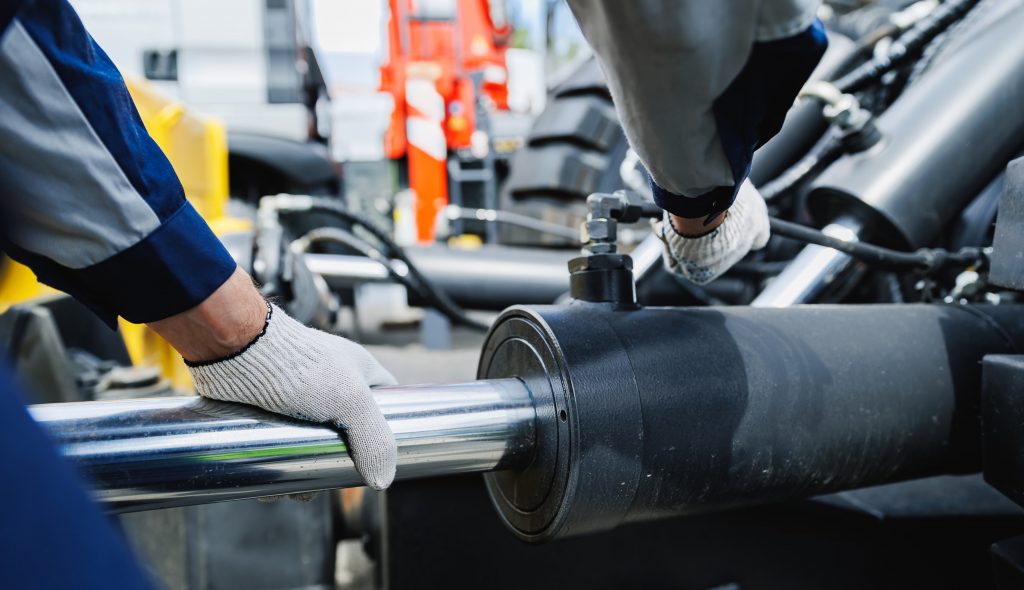
What Is Electro Hydraulic System?
Electro hydraulic system represents the integration of electrical and electronic signal processing with hydraulic power units, valves, and actuators. At their core, these systems use pressurised hydraulic fluid to transmit power and generate motion, but they add an electronic control layer that transforms how operators and machines interact with hydraulic drives.
In simple terms, an electrical input—whether from a joystick signal, PLC command, or sensor feedback—gets converted into controlled hydraulic pressure and flow. This controlled output then moves cylinders and motors to achieve the desired results. The process relies on Pascal’s Law, which states that pressure applied to a confined, incompressible fluid transmits equally in all directions. This principle enables remarkable force multiplication: minimal input can generate tons of mechanical output through actuators.
Traditional purely hydraulic systems depend on manual valves and mechanical linkages for control. An operator might pull a lever connected directly to a spool valve, with no electronic intervention. Electro hydraulic systems replace or augment these mechanical connections with solenoids, proportional valves, and ECUs. Over time, electronic control systems have been developed, evolving from simple relay-based controls to advanced digital control interfaces. This evolution allows for programmable operation, remote control, and integration with broader automation systems.
The main building blocks of an electro hydraulic system include:
- Power source: An electric motor drives hydraulic pumps to pressurise the fluid
- Hydraulic components: Valves direct flow, while actuators (cylinders and motors) convert hydraulic energy into mechanical motion
- Electronic controls: Sensors measure system states, controllers process data and execute algorithms, and wiring connects all devices
- Software algorithms: Program logic determines how the system responds to inputs and conditions
Modern systems increasingly rely on digital control for precise, programmable operation and seamless integration with automation platforms.
These elements work together to create smart hydraulics solutions that offer advantages over purely mechanical approaches. Whether described as electronically controlled hydraulics or hybrid hydraulic systems, the underlying concept remains consistent: electronic intelligence directing hydraulic power.
Core Components and Architecture
Understanding electro hydraulic systems requires familiarity with both the physical and electronic elements that make up a typical configuration. Advanced electro-hydraulic valves and system architectures are specifically designed to minimise pressure losses, which significantly improves overall system efficiency and responsiveness. This section breaks down each layer of the architecture.
Hydraulic Power Generation
The hydraulic power section begins with an electric motor coupled to a pump. Fixed displacement pumps deliver constant flow regardless of pressure, while variable displacement designs adjust output based on demand—offering better efficiency for many applications. The pump draws hydraulic fluid from a reservoir and pressurises it, typically to a range between 100 and 350 bar depending on the application.
Supporting components include:
- Reservoir: Stores fluid and allows heat dissipation and air separation
- Filters: Remove contaminants that would otherwise damage precision components
- Coolers: Manage temperature to prevent fluid degradation
- Hydraulic accumulator: Stores pressurised fluid for peak demand or emergency functions
Actuation Devices
Actuators convert hydraulic energy back into useful mechanical work. Hydraulic cylinders provide linear motion, pushing or pulling loads along a straight path. Hydraulic motors deliver rotary motion for applications requiring continuous rotation.
These devices handle impressive force and torque outputs. A cylinder operating at 250 bar with a 100mm bore diameter generates roughly 196 kN of force—enough to lift substantial loads in construction equipment or press tonnage in manufacturing.
Control Elements
Valves form the control heart of any hydraulic system. In electro hydraulic configurations, these valves receive electrical signals rather than purely mechanical inputs:
| Valve Type | Function | Electro Hydraulic Adaptation |
|---|---|---|
| Directional control valve | Routes fluid to actuators | Solenoid-operated spools |
| Pressure control valve | Limits or regulates pressure | Electronic pressure relief |
| Flow control valve | Regulates the speed of motion | Proportional flow adjustment |
Each control valve type can be adapted for electronic actuation, from simple on/off solenoids to sophisticated proportional and servo configurations.
Electronic Layer
The electronic control layer provides the intelligence that distinguishes electro hydraulic systems from their purely hydraulic predecessors. Key devices include:
- Pressure transducers: Measure system and load pressures
- Position sensors: Track cylinder extension or motor rotation
- Temperature sensors: Monitor fluid and component temperatures
- Flow sensors: Measure actual fluid movement rates
- ECU or PLC: The controller that processes inputs and generates outputs
- User interface: Joysticks, pedals, touchscreens for operator input
Communication and Networking
Modern electro hydraulic systems rarely operate in isolation. CAN bus networks connect multiple controllers and sensors on mobile machinery, while Ethernet-based fieldbuses link components in industrial settings. This communication infrastructure enables coordinated machine control across numerous devices, supporting features like system monitoring and centralised diagnostics.
Signal Types and Electronic Control Principles
Signals flow continuously through an electro hydraulic system, moving from operator inputs and sensors to the ECU and then onward to valves and actuators. This signal processing chain establishes the foundation for precise, responsive control.
Analogue Signals
Analogue signals vary continuously over a range, typically 0–10 V or 4–20 mA. A joystick might output 5 V when centred and 10 V when pushed fully forward, with every intermediate position producing a corresponding voltage. This continuous adjustment translates directly to proportional valve control, enabling smooth modulation of flow and pressure.
Sensors also generate analogue signals. A pressure transducer might output 4 mA at zero pressure and 20 mA at maximum rated pressure, with linear scaling between these points.
Digital Signals
Digital signals operate in discrete states—on or off, high or low. Microcontrollers generate pulse-width-modulated (PWM) outputs that rapidly switch between states. The ratio of on-time to cycle time determines the effective output level, allowing digital systems to approximate analogue behaviour.
Binary encoding and bit resolution affect control accuracy. A 12-bit analogue-to-digital converter divides the input range into 4,096 discrete levels, providing sufficient resolution for most hydraulic control applications.
The Role of the Controller
The ECU or PLC sits at the centre of signal flow, performing several critical functions:
- Reading multiple analogue and digital inputs from sensors and operator devices
- Executing control algorithms, including PID (proportional-integral-derivative) loops
- Generating outputs to solenoids, proportional valves, and variable-speed drives
- Managing communication with other controllers and diagnostic tools
Open-Loop vs Closed-Loop Control
In open loop control, the controller sends a command without receiving feedback about actual performance. A pump might run at a fixed speed regardless of whether the actuator achieves the intended motion.
Closed loop control adds feedback to verify results. Consider speed control of a hydraulic motor:
- Open loop: The controller commands a valve position and assumes the motor spins at the expected speed
- Closed loop: A speed sensor measures actual rotation, the controller compares this to the setpoint, and adjustments occur continuously to maintain accurate speed
Closed loop systems deliver far superior accuracy but require additional sensors and more sophisticated algorithms.
Advanced Control Techniques
Emerging practices in smart hydraulics extend beyond basic PID control:
- Model-based control uses mathematical representations of system behaviour for predictive adjustments
- AI-assisted tuning optimises parameters automatically based on observed performance
- Remote parameter updates allow engineers to refine control from anywhere with network access
These methods represent the frontier of electro hydraulic control technology.
Types of Electro Hydraulic System
Electro hydraulic system is often categorised into three groups based on the type of valve and control strategy employed. Each offers distinct characteristics suited to different applications and budget requirements.
Solenoid-Operated On/Off Systems
The simplest form of electro hydraulic control uses binary solenoids that either fully open or fully close valve passages. These systems rely on relay technology or basic digital logic to trigger solenoid coils.
Characteristics:
- Binary operation: fully open or fully closed
- Fast switching but no intermediate positions
- Lower component cost
- Robust and straightforward to troubleshoot
Typical applications include agricultural attachments, small construction equipment, and basic industrial presses where cost and robustness outweigh the need for fine precision. A log splitter, for example, needs only extend and retract functions without speed modulation.
Proportional Valve Systems
Proportional systems represent a significant step up in capability. The valve spool position varies continuously in response to an analogue or PWM control signal, enabling fine control of speed, position, and force.
Characteristics:
- Continuous adjustment of valve opening
- Smooth acceleration and deceleration
- Integration with PLCs and vehicle controllers
- Better energy efficiency than on/off systems
Typical applications include injection moulding machines requiring precise control over fill and pack phases, lifting platforms needing smooth positioning, and mobile cranes where load handling demands gradual movements. Machine control systems coordinate these valves with sensors to maintain process accuracy.
Servo and High-Response Proportional Systems
At the top of the performance spectrum, servo and high-response proportional systems use feedback devices and specialised amplifiers to deliver rapid, accurate control. Response times drop to sub-millisecond levels, and positioning accuracy can reach micron levels.
Characteristics:
- Very fast response (bandwidth up to 500 Hz)
- Excellent repeatability and accuracy
- Requires clean fluid and careful installation
- Higher component and integration costs
Typical applications include CNC machine tools achieving feed rates over 50 m/min with micron-level precision, aerospace test rigs demanding exact force and position profiles, and high-speed metal forming lines where cycle time directly impacts productivity.
Hybrid Hydraulic Systems
Hybrid hydraulic systems combine electro hydraulic units with energy storage elements or electric drives to recover and reuse energy. This approach addresses the traditional criticism of hydraulic inefficiency.
Key concepts:
- Energy recovery from lowering loads or braking events
- Storage in hydraulic accumulators or batteries
- Re-use to assist subsequent motion cycles
- Reduced fuel or electricity consumption
Real-world examples include refuse collection vehicles that capture braking energy and hybrid excavators that store energy when lowering the boom for reuse during the next lift. These solutions significantly reduce the energy needed for repetitive operations.
Applications Across Industries
Electro hydraulic technology has become standard across numerous industries, valued for its combination of power density and controllability. The following sections examine key sectors and their specific requirements.
Aerospace Industry
The aerospace industry relies heavily on hydraulics for critical flight functions. Electro hydraulic actuators control:
- Flight control surfaces (ailerons, elevators, rudders)
- Landing gear extension and retraction
- Thrust reversers
- Cargo door operation
Redundancy and reliability are paramount. Aircraft typically employ multiple independent hydraulic circuits so that a single failure does not compromise safety. Precise control ensures smooth, predictable aircraft response to pilot inputs.
Modern aircraft programmes increasingly explore electro-hydrostatic and electro-mechanical alternatives, but traditional electro hydraulic systems remain prevalent in current fleets.
Construction and Off-Highway Vehicles
Electronically controlled hydraulics have transformed construction equipment performance. Modern excavators, wheel loaders, telehandlers, and cranes feature:
- Load-sensing systems that match pump output to actual demand
- Independent metering valves for precise boom, bucket, and stick control
- Operator assistance features like grade control and payload weighing
- Steering systems that reduce operator effort while enhancing stability
Industry data shows electro hydraulic excavators comprising approximately 65% of new sales, with fuel efficiencies improving 15–25% over purely mechanical linkages. This shift reflects both regulatory pressure and operational cost benefits.
Manufacturing and Industrial Automation
Factory floors depend on electro hydraulic systems for processes demanding high forces and repeatable cycles:
| Application | Typical Requirements | EH Advantage |
|---|---|---|
| Injection moulding | Precise pressure and speed profiles | Consistent part quality |
| Metal forming presses | High force, accurate positioning | Reduced scrap rates |
| Clamping systems | Reliable holding force | Safety and repeatability |
| Robotic handling | Fast, smooth motion | Cycle time reduction |
Electro hydraulic axes increasingly integrate with electric servo axes on the same production line, forming flexible hybrid machines that match the right technology to each motion requirement.
Energy, Marine, and Other Sectors
Beyond the major sectors, electro hydraulic systems serve critical roles in:
- Wind turbines: Pitch control adjusts blade angle for optimal power capture and storm protection
- Offshore winches: Handle heavy loads in harsh marine environments
- Subsea tooling: Operate remotely at depths where compact, reliable power is essential
- Automotive manufacturing: Press operations and assembly line devices
These applications share a common thread: the need for controllable power in challenging conditions where electric alternatives may fall short.
Benefits and Limitations
Electro hydraulic systems offer advantages over purely hydraulic or fully electric solutions, but understanding their trade-offs helps ensure appropriate technology selection.
Key Benefits
High power density allows compact actuators and small footprints for a given force or torque requirement. Hydraulic systems achieve power densities of 500–1000 W/kg, compared to 50–200 W/kg for electric systems. This matters greatly in mobile applications where space and weight carry penalties.
Enhanced controllability through proportional and servo technology enables:
- Smooth acceleration and deceleration
- Accurate positioning without mechanical stops
- Force limiting to protect equipment and operators
- Programmable motion profiles
Energy savings emerge from intelligent control strategies:
- Load-sensing pumps adjust output to actual demand
- Variable-speed drives match motor speed to the required flow
- Regenerative circuits capture and reuse energy
- Smart hydraulics optimise performance in real time
Quantitative data shows efficiencies reaching 85–92% in regenerative setups versus 70–80% in standard configurations.
Improved safety and diagnostics stem from sensor integration:
- Real-time system monitoring detects problems early
- Fault codes guide technicians to specific issues
- Remote diagnostics reduce response time
- Failure rates drop 40–60% with electronic diagnostics
Limitations and Challenges
Higher initial cost compared with simple valve and relay setups affects project budgets. Proportional and servo systems require specialised design, commissioning skills, and more expensive components—typically 20–50% above basic hydraulic configurations.
Sensitivity to contamination represents perhaps the greatest operational concern. Particulates over 10 microns cause an estimated 70% of hydraulic failures. Rigorous fluid cleanliness and maintenance practices are essential.
Electronic vulnerabilities require attention:
- Electromagnetic interference can disrupt sensor signals
- Environmental sealing protects against moisture and dust
- Software faults may require expert diagnosis
- Cybersecurity risks emerge in networked smart hydraulics
Comparison with All-Electric Actuation
Hydraulics still dominate where very high forces are required. A hydraulic cylinder generating 1000 kN would require an enormous electric servo in comparison. Harsh environments with dust, heat, or shock also favour hydraulic robustness.
However, electric and electro-mechanical options gain ground in applications with lower force requirements, intermittent duty cycles, and clean-room constraints. Many facilities now deploy both technologies, selecting the best fit for each axis or function.
Careful system design, component selection, and life-cycle planning maximise the benefits of electro hydraulic technology while managing its inherent limitations.
Emerging Trends in Smart and Hybrid Hydraulics
Digitalisation, electrification, and sustainability targets are reshaping electronically controlled hydraulics. The pace of change has accelerated, with new capabilities becoming practical realities rather than laboratory concepts.
Smart Hydraulics
Smart hydraulics integrate advanced sensors, embedded controllers, and connectivity to enable real-time monitoring and optimisation. Key capabilities include:
- Predictive maintenance: Vibration and pressure monitoring identify problems before failures occur, cutting downtime by up to 50%
- Remote diagnostics: Technicians access system data from anywhere with network connectivity
- Over-the-air updates: Software improvements deploy without physical service visits
- Digital twins: Virtual models simulate system behaviour for optimisation and training
These features transform maintenance from reactive to proactive, improving reliability and reducing the total cost of ownership.
Hybrid Hydraulic Systems
Hybrid configurations combine traditional hydraulic components with energy storage and recovery mechanisms:
- Lowering a load: The pump acts as a motor, driven by the descending weight, charging an accumulator
- Lifting the next load: Stored energy assists the pump, reducing motor power demand
- Net result: 30–40% reduction in energy consumption for repetitive cycles
Construction machines, refuse vehicles, and material handlers benefit particularly from hybrid approaches. The energy needed for repeated lift-lower cycles drops substantially when recovery systems capture otherwise wasted potential energy.
AI and Data Analytics
Machine learning models increasingly support hydraulic system management:
- Automatic tuning of control parameters based on observed performance
- Anomaly detection that spots unusual behaviour patterns
- Adaptive control that adjusts to different operating conditions
- Performance prediction for maintenance scheduling
These digital systems build knowledge over time, becoming more effective as data accumulates.
Path Towards Electrification
The future likely involves coexistence rather than wholesale replacement:
- Variable-speed electric drives on pumps reduce idle losses
- Electro-hydrostatic actuators combine electric motors with local hydraulic circuits
- Electro-mechanical cylinders replace hydraulics in lower-force applications
- Hybrid fleets mix technologies based on application requirements
Industry forecasts predict 25–30% market growth by 2030, driven by electrification mandates and efficiency demands. Hydraulic, hybrid, and fully electric solutions will coexist through the 2030s, each finding appropriate niches.
Design and Implementation Considerations
Effective electro hydraulic systems require coordinated mechanical, hydraulic, electrical, and software design. Success depends on systematic approaches across all disciplines.
Key Design Steps
Requirements definition establishes the foundation:
- Force, torque, and speed requirements for all motions
- Accuracy and repeatability specifications
- Duty cycle and operating environment
- Safety levels and applicable standards
- Budget and maintenance constraints
Architecture selection follows requirements analysis:
| System Type | Best For | Trade-offs |
|---|---|---|
| On/off solenoid | Simple, infrequent operations | Limited control precision |
| Proportional | Most industrial and mobile apps | Moderate cost and complexity |
| Servo | High-speed, high-accuracy needs | Higher cost, skill requirements |
| Hybrid | Energy-sensitive applications | Integration complexity |
Component sizing ensures reliable operation:
- Pumps matched to flow and pressure demands with appropriate margins
- Actuators sized for force plus safety factors
- Valves selected for flow capacity and response requirements
- Thermal management provisions for expected heat loads
Control System Design
Designing the control system involves several interrelated decisions:
- Sensor selection based on accuracy, response, and environmental rating
- Controller platform choice (dedicated ECU, PLC, or embedded system)
- Control strategy definition (open loop, closed loop, cascaded loops)
- Functional safety assessment per applicable standards
For mobile machinery and aerospace applications, functional safety requirements often mandate specific architectures, redundancy levels, and certified components.
Implementation and Commissioning
Proper implementation protects against common failure modes:
- Wiring practices: Correct cable routing, shielding, and grounding prevent electromagnetic interference
- EMC management: Filter incoming power and separate signal from power cables
- Initial tuning: Systematic parameter adjustment achieves stable, responsive control
- Validation testing: Verify performance against specifications before production use
- Operator training: Ensure personnel understand system operation and limitations
Maintenance and Life-Cycle Aspects
Ongoing maintenance sustains performance and extends system life:
- Scheduled inspection and replacement of hydraulic fluid, filters, and hoses
- Regular review of sensor calibration
- Software updates as manufacturers release improvements
- Data logging review to identify emerging issues
- Continuous improvement based on field experience
With clean fluid, proper filtration, correct sizing, and timely maintenance, major components operate reliably for many thousands of hours. Electronic modules designed for industrial and mobile environments match these expectations when properly protected from environmental hazards.
Frequently Asked Questions
How do electro hydraulic systems differ from traditional hydraulic systems?
Both use pressurised hydraulic fluid for power transmission, but electro hydraulic systems add sensors, ECUs, and software to control valves and pumps electronically. Traditional systems rely on manual valves and mechanical linkages operated directly by the user. The electronic layer enables more precise control, automated operation, integration with broader machine control systems, and features like remote diagnostics that purely mechanical devices cannot provide.
Are electro hydraulic systems suitable for retrofitting older machines?
Many legacy machines can be upgraded with solenoid or proportional valves, basic ECUs, and sensor packages. However, feasibility depends on several factors: available space for mounting new components, power supply capacity for electronic devices, compatibility with existing hydraulic circuits, and safety requirements that may have changed since original construction. A case-by-case assessment by qualified engineers determines whether retrofit offers advantages worth the investment.
What skills are needed to design or maintain electronically controlled hydraulics?
Success requires multidisciplinary knowledge covering hydraulics, electronics, control theory, and diagnostics. Technicians and engineers often need additional training in software tools, networking, and system integration beyond traditional hydraulic skills. Understanding both the mechanical and electronic domains—and how they interact—proves essential for effective troubleshooting and optimisation. Many equipment manufacturers and training providers offer courses addressing this complexity.
How do electro hydraulic and all-electric actuation compare in terms of energy efficiency?
Efficiency depends heavily on application characteristics. Electric systems can be very efficient at lower forces and intermittent duty cycles, where regenerative drives recover braking energy effectively. However, well-designed hybrid hydraulic systems with energy recovery compete strongly in high-force, high-duty-cycle tasks. The best choice requires analysing specific motion profiles, force requirements, cycle times, and installation constraints rather than applying blanket assumptions.
What typical service life can be expected from an electro hydraulic system?
With clean fluid, proper filtration, correct component sizing, and timely maintenance, major hydraulic components operate reliably for many thousands of hours—often 10,000 to 20,000 hours or more in industrial applications. Electronic modules designed for industrial and mobile environments typically match these expectations when adequately protected from moisture, vibration, and temperature extremes. Regular inspection and proactive replacement of wear items like seals and filters extend overall system longevity.